
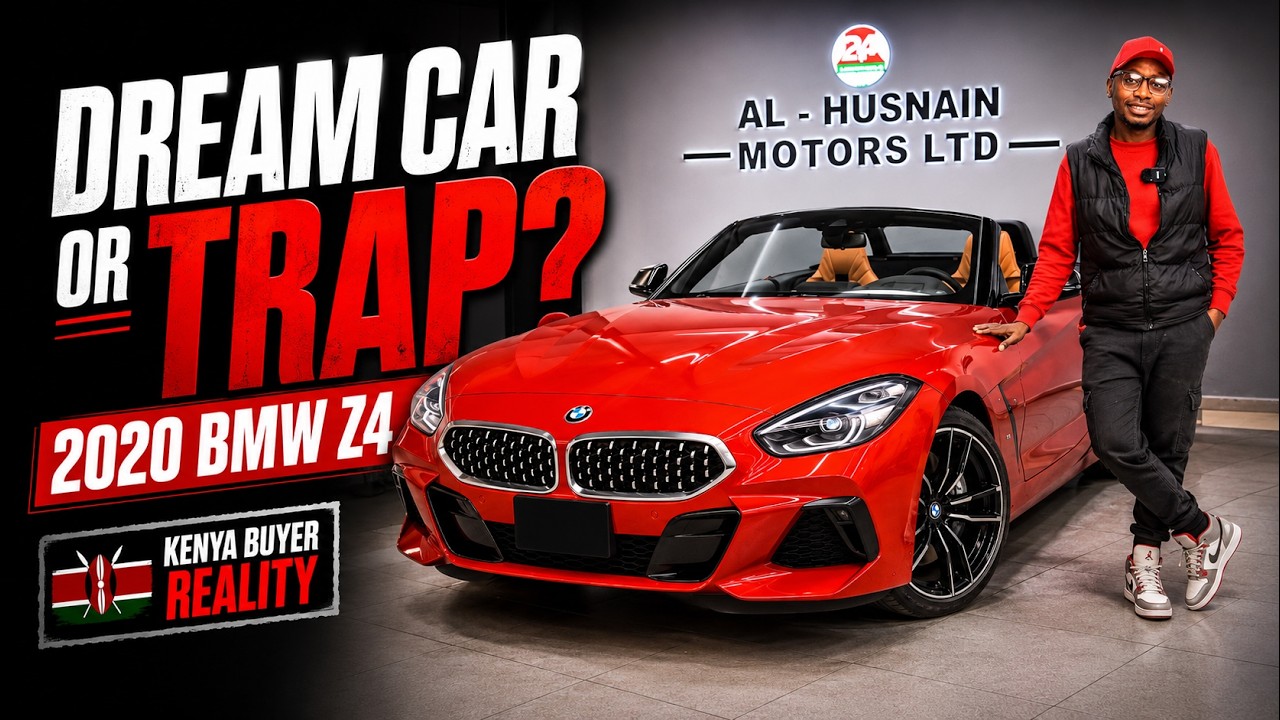
Kenya buying guide: 2020 BMW Z4 sDrive20i
This guide uses BMW’s UK launch specification as the 2020 sDrive20i technical reference and Kenyan government, official-support and dated advertised-market evidence checked on 11 October 2026. It does not claim a road test of the featured car.
1. Confirm identity before condition
Record the VIN, engine designation, manufacture year, first-registration date, mileage and duty status. Obtain the BMW build sheet. The reference sDrive20i uses a 1,998 cc turbo four-cylinder rated at 197 hp and 320 Nm, an eight-speed automatic and rear-wheel drive. BMW technical reference.
Do not infer equipment from M badges, wheels or seller copy. Confirm factory paint, interior, wheel size, suspension, brakes, driver-assistance systems, audio and comfort options.
2. Verify ownership and insurance
Use NTSA’s official portal to verify the logbook and complete the formal transfer. Match the VIN and registration details to the physical car and seller. NTSA logbook verification.
Kenyan law requires third-party motor insurance for road use. Request comprehensive quotations before paying a deposit and disclose the exact vehicle, usage and modifications. Insurance Act.
3. Start with a cold inspection
Ask the seller not to start the car before arrival. Observe cold start, idle, smoke, warning lights and unusual noises. Inspect oil and coolant leaks, hoses, reservoir condition and battery health. Demand itemised service invoices rather than relying on a stamp alone.
4. Test the roof and water sealing
Cycle the roof fully at least three times. Watch both sides, listen for strain and check windows, latches and warnings. Inspect roof fabric, headlining, seals, drains, boot floor, carpets and storage areas for moisture, stains or corrosion.
Do not accept “it only needs calibration” without a diagnostic report and repair quotation. Roof faults can involve sensors, wiring, alignment, water ingress or mechanisms.
5. Inspect wheels and tyres
Record tyre sizes, brands, date codes, speed/load ratings and tread depths. Check inner shoulders, reject bubbles or exposed cords, and inspect the inside of each wheel for cracks or welding.
Price one correct tyre and a matching set before negotiating. Uneven wear calls for suspension and alignment inspection, not only replacement rubber.
6. Check the underside and route fit
Inspect the front lip, bumper underside, undertrays, exhaust area, jacking points and floor. Test the real entrances you use. BMW’s reference material does not establish ground clearance for this exact import, so measure the car rather than repeating an unverified figure.
7. Drive it cold and warm
Check gentle take-off, parking manoeuvres, manual shifts, kickdown and steady-speed behaviour. There should be no drivetrain warning, flare, harsh engagement or repeated hesitation.
Brake progressively at legal speeds and check for vibration or pulling. Listen for suspension knocks and wheel-bearing hum. Confirm the steering tracks and returns consistently.
8. Scan every module
Use BMW-capable diagnostics for engine, transmission, roof, restraint, body, parking, lighting, battery and communication systems. Save the report. Investigate stored faults; clearing codes is not repair.
Test both keys, iDrive, Bluetooth, USB, navigation, cameras, parking sensors, climate control, seats, mirrors, windows, lighting and every switch.
9. Build the Kenyan budget
EPRA lists Nairobi super petrol at KSh 214.03/litre for 15 September–14 October 2026. The official-cycle equivalent of roughly 7.1–7.3 L/100 km gives an ideal baseline of about KSh 1,520–1,562 per 100 km. Actual congestion and driving style can raise it. EPRA.
Add written prices for comprehensive insurance, annual servicing, brakes, correct tyres, alignment, battery, diagnostics and secure parking. Keep a contingency for suspension, cooling, seals and roof repairs.
10. Treat adverts as leads
A Kenyan importer guide advertises a 2020 sDrive20i M Sport around KSh 5.8–6.8 million, while marketplace pages mix sDrive20i and M40i cars. Importer reference; marketplace reference.
No single current price is verified because engine, condition, duty status, mileage and documentation differ. Compare like-for-like cars and negotiate from inspection evidence.
11. Verify service and parts
BMW Kenya identifies an Inchcape service centre in Nairobi, and Inchcape states that its Kenyan centres supply genuine partner-approved parts. Ask for VIN-based prices and lead times for service items, brakes, suspension and roof-specific components. BMW Kenya; Inchcape.
For an independent specialist, verify diagnostic equipment, G-series experience, convertible experience and documentation.
12. Final purchase checklist
Before paying, confirm:
- VIN, logbook, seller and duty status match;
- the BMW build sheet identifies the factory specification;
- itemised service and repair history is coherent;
- a full-module diagnostic report is saved and explained;
- the roof completes repeated cycles with no water evidence;
- wheels and tyres are safe, matched and correctly rated;
- drivetrain, brakes, steering and suspension pass inspection;
- the underside shows no unacceptable impact;
- comprehensive insurance is available at an affordable written price;
- a repair reserve remains after purchase;
- both keys, manual, receipts and transfer documents are present.
Walk away from identity mismatch, unexplained water ingress, structural repair, unsafe wheel repairs, persistent roof faults, recently cleared diagnostics or a seller who blocks an independent inspection.